
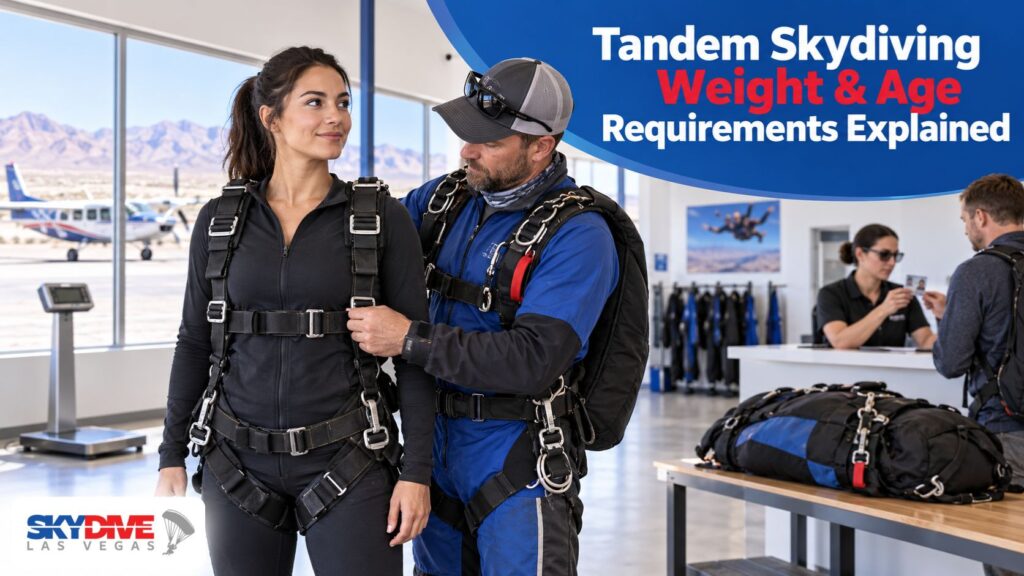
Thinking about your first jump, but worried you might not qualify? Here’s the short version: to make a tandem skydive, you generally need to be at least 18 years old, weigh under the dropzone’s posted limit (commonly around 220–250 lbs), and be in reasonable health with enough mobility to follow a few simple instructions. There’s usually no upper age limit at all.
How Old Do You Have to Be to Skydive?
In the United States, you must be 18 years old to make a tandem skydive. This is set by the United States Parachute Association (USPA) and followed by reputable drop zones nationwide.
It’s a firm rule. A 16- or 17-year-old can’t jump even with a parent signing a waiver, because the participant has to sign the legal agreement themselves. Bring a valid, government-issued photo ID on the day you’ll be asked to show it.
In short: You can skydive starting at your 18th birthday, ID required, no younger.
Is There a Maximum Age to Skydive?
For most people, no. There’s no upper age cutoff for healthy adults with reasonable mobility. It’s common to see jumpers in their 70s and beyond.
Age becomes a conversation rather than a barrier when health and mobility come into play. Many dropzones simply ask a few extra questions for older guests to make sure the jump will be safe and enjoyable. If you’re over 70 and unsure, a quick phone call clears it up fast.
What’s the Weight Limit for Tandem Skydiving?
Most dropzones set a tandem weight limit somewhere between 220 and 250 lbs, and many also ask that you be height-to-weight proportionate. Some operators publish a single number; others use a height/weight chart.
You’ll be weighed at check-in. That can feel awkward, but it isn’t about appearance; it’s a safety number that has to add up before you board the plane.
Here’s roughly how limits compare across the industry:
Type of jump | Typical weight limit | Notes |
Tandem student | ~220–250 lbs | Often must be height/weight proportionate; charts vary by dropzone |
AFF / solo training student | ~200–240 lbs | Tighter, because you fly your own parachute |
Combined tandem system (you + instructor + gear) | ~500 lbs max | Set by the equipment manufacturer’s certification |
In short: Plan for a tandem limit in the low-to-mid 200s, confirm the exact figure with your dropzone, and expect a quick weigh-in.
Can You Skydive If You’re Overweight?
Often, yes, as long as you’re under the limit and the harness fits securely. Being on the higher end of the range isn’t an automatic no.
Two practical things matter beyond the scale. First, harness fit: the straps have to cinch down safely, so body shape, not just weight, plays a role. Second, the landing position: you’ll need to lift your legs in front of you and hold them up for the last several seconds before touchdown, which takes a little core strength.
Some dropzones add a surcharge above a certain weight (for example, a per-pound fee over 220 lbs). That reflects the extra physical work for the instructor and the experience required, not a judgment about you.
Why Do Weight Limits Exist at All?
This is the part most people never get explained, and it makes the rules feel a lot fairer once you understand it.
- The gear is certified to a tested limit. Tandem rigs are approved by the FAA under a Technical Standard Order (TSO). The system is rated for a maximum combined weight of you, your instructor, and the equipment together, commonly capped at around 500 lbs.
- Parachutes have a performance range. A canopy is essentially an engineered fabric and lines. Load it too heavily, and it opens harder, descends faster, and becomes tougher to steer and “flare” (the slow-down move right before landing).
- Your instructor does real work up there. Picture a smaller instructor controlling and landing a parachute with a much heavier passenger strapped to their chest. The heavier the pair, the more strength and margin every part of the jump demands.
Put simply, the limit keeps the whole tandem pair inside the range where the equipment and the instructor can reliably bring you both down safely.
In short, Weight limits aren’t arbitrary; they come from tested gear ratings, parachute physics, and the instructor’s ability to land you safely.
Is There a Minimum Weight or Height?
This rarely gets mentioned, but it matters for petite and younger-looking adults. If you’re very small or very light, the standard harness may not tighten down enough for a secure fit.
It rarely disqualifies anyone; it usually just means a quick harness-fit check on the ground before you suit up. If you’re under about 100 lbs or unusually short, mention it when you book so the team is ready.
Do You Have to Be Fit or Healthy to Skydive?
You don’t need to be an athlete. You need basic mobility and generally good health enough to climb into the aircraft, get into the arched free-fall position, and lift your legs for landing.
A medical condition doesn’t automatically rule you out. Common, well-managed conditions like controlled high blood pressure or diabetes are frequently fine; the dropzone may just ask a couple of questions. More serious or uncontrolled conditions can require a doctor’s clearance first.
Tandem skydiving is also more accessible than many assume. People who are amputees, paraplegic, or visually impaired have completed tandem jumps with the right preparation. The honest rule of thumb: be upfront about your health so the instructors can plan a safe jump, and when something’s uncertain, talk to your doctor and call the dropzone.
In short, Reasonable mobility plus honest disclosure covers most people. Some conditions need a quick medical okay, not an automatic “no.”
What Actually Disqualifies You?
There’s no single master list, but the usual deal-breakers are short:
- Being under 18
- Exceeding the posted weight limit (or being unable to get a secure harness fit)
- A serious, uncontrolled medical condition
- Being unable to follow basic physical instructions, like lifting your legs for landing
- Being under the influence of alcohol or drugs
Almost everything outside of those is handled case by case, which is exactly why a phone call beats assuming you’re out.
Skydiving Near Las Vegas: A Quick Local Note
If you’re planning a jump around Las Vegas, the requirements above are the same ones you’ll meet here: 18 and up, a posted weight limit, and reasonable health. The bonus is the view: clear desert skies and wide-open Nevada terrain under freefall.
At Skydive Las Vegas, first-timers go up attached to a USPA-certified instructor after a full safety briefing, so you’re never figuring anything out alone. If you’re unsure whether your age, weight, or health fits the requirements, the fastest path is simply to ask before you book. We’d rather answer the question than have you talk yourself out of a jump you’d actually qualify for.
A Little Honest Advice
If you’re close to the weight limit, near the upper age range, or managing a health condition, don’t guess from a blog, yours or anyone else’s. Numbers and policies vary slightly between dropzones, and a five-minute call gets you a real answer for your situation.
And if it turns out a tandem jump isn’t the right fit on a given day, say, conditions or a fit issue, a good dropzone will tell you honestly and help you find an alternative rather than push you into a jump that isn’t safe or fun.
Frequently Asked Questions
Most tandem dropzones set the limit between 220 and 250 lbs and ask that you be roughly height-to-weight proportionate. The exact number varies, so confirm with your chosen operator.
You must be at least 18 in the U.S. There's generally no maximum age for healthy adults with reasonable mobility.
Often, yes, if you're under the weight limit and the harness fits securely. Some dropzones apply a surcharge above a set weight to account for the added physical demands.
Many people can. Well-managed conditions are frequently fine; more serious ones may need a doctor's clearance. Always disclose your health honestly so instructors can keep the jump safe.
Yes, a valid, government-issued photo ID to verify you're 18 or older. You won't be allowed to jump without it.
Usually, yes. Dropzones weigh tandem students at check-in to confirm the combined weight stays within the equipment's certified limit. It's a routine safety step.
Call the dropzone before booking. Most age, weight, and health questions are resolved quickly, and many people who assumed they couldn't jump turn out to be eligible.
Ready to Find Out If You’re Cleared to Jump?
Now you know the real tandem skydiving weight and age requirements: 18 and up, under the posted weight limit, height-to-weight proportionate, and in reasonable health with most other concerns sorted out by a quick conversation rather than a hard no.
If you’re near Las Vegas and ready to check your eligibility or lock in a date, reach out to Skydive Las Vegas. Call now or book online to get current pricing, availability, and a straight answer about your specific situation. Then come experience the Nevada desert from 12,000-plus feet up.
